
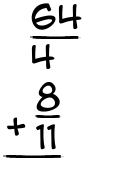
What is 64/4 + 8/11?
|
This is how we add
|
|||||||||||||||||||||||||
Step 1Can you add yet? Nope! The denominators don't match. We need a common denominator. So next we take both denominators and multiply them. Next, take each numerator and multiply it by the denominator of the other term. So, we multiply 64 by 11, and get 704, then we multiply 4 by 11 and get 44. Now for the second term. You multiply 8 by 4, and get 32, then multiply 4 by 11 and get 44. We now have a new problem, that looks like this:
|
|||||||||||||||||||||||||
Step 2Since our denominators match, we can add the numerators. 704 + 32 = 736 That gives us the sum, which is
|
|||||||||||||||||||||||||
Step 3Now, do we need to simplify this fraction? First, we attempt to divide it by 2... Are both the numerator and the denominator evenly divisible by 2? Yes! So we reduce it:
Let's try dividing by that again... Are both the numerator and the denominator evenly divisible by 2? Yes! So we reduce it:
Let's try dividing by that again... Nope! So now we try the next greatest prime number, 3... Nope! So now we try the next greatest prime number, 5... Nope! So now we try the next greatest prime number, 7... Nope! So now we try the next greatest prime number, 11... Nope! So now we try the next greatest prime number, 13... No good. 13 is larger than 11. So we're done reducing. There you have it! Here's the final answer to 64/4 + 8/11
|